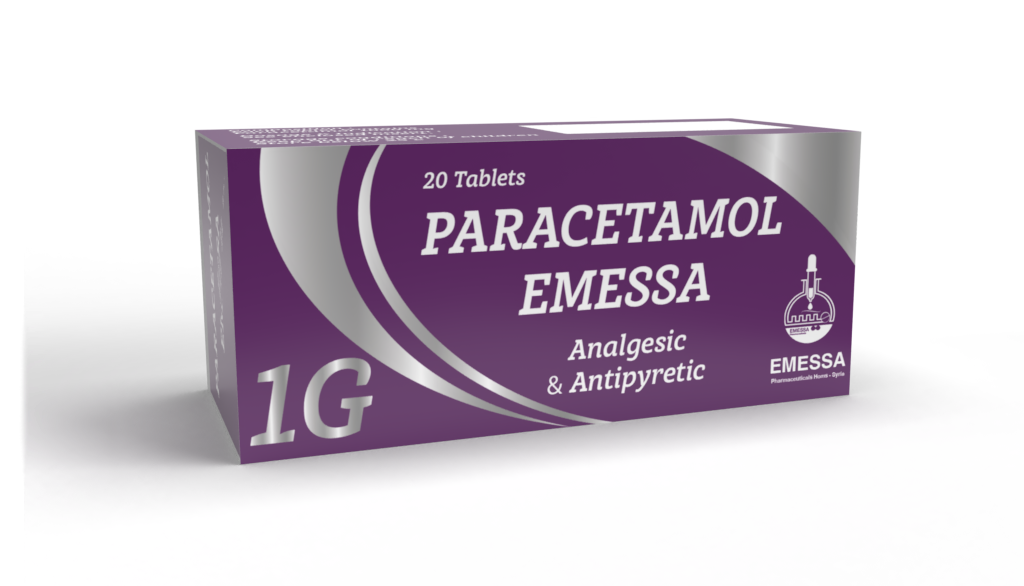
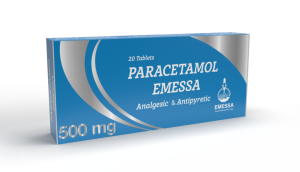
Composition: Each PARACETAMOL EMESSA 500 contains 500 mg paracetamol.
Each PARACETAMOL EMESSA 1000 contains 1000 mg paracetamol.
Excipients: Microcrystalline sodium, sodium starch glycolate, povidone, magnesium stearate, stearic acid, talc.
Mechanism of action:
Analgesic effect: Paracetamol may act by inhibiting prostaglandin synthesis in the central nervous system (CNS) and to a lesser extent, through a peripheral action by blocking pain-impulse generation.
Antipyretic effect: paracetamol probably produces antipyresis by acting centrally on the hypothalamic heat-regulation center to produce peripheral vasodilation resulting in increased blood flow through the skin, sweating and heat loss.
Indications:
For the treatment of mild to moderate pain including headache, backache, migraine, neuralgia, toothache, sore throat, period pain, aches and pain, symptomatic relief of rheumatic pain, mascular pain and pains of cold & influenza, fever, feverish colds and post-immunisation fever.
Contraindications:
Hypersensitivity to paracetamol or any of the components.
Warnings and precautions:
- In the elderly, the rate and extent of paracetamol absorption is normal but plasma half-life is longer and paracetamol clearance is lower than in adults.
- Care is advised in the administration of paracetamol to patients with severe renal or severe hepatic impairment. The hazards of overdose are greater in those with non-cirrhotic alcoholic liver disease.
- Patients should be advised that paracetamol may cause severe skin reactions. If a skin reaction such as reddening, blisters, or rash occurs or if existing skin symptoms worsen the patient should stop use and seek medical assistance right away.
- If sore throat is severe, persists for more than 2 days or is accompanied or followed by fever, headache, rash, nausea, or vomiting, the patient should consult the doctor promptly.
- The patient shouldn’t take this drug with any other paracetamol-containing product.
- If symptoms persist for more than 3 days or get worse the patient should consult the doctor.
- The patient should consult the doctor at once if he takes too much of paracetamol, this is because too much paracetamol can cause delayed, serious liver damage.
- This medicine shouldn’t be given to the child for more than 3 days without consulting to the doctor or pharmacist.
- Due to the presence of sucrose and sorbitol, patients with rare hereditary problems of fructose intolerance, glucose-galactose malabsorption or sucrase-isomaltase insufficiency should not take this medicine.
- Ethyl, Propyl and Methyl parahydroxybenzoate may cause allergic reactions.
- Caution is advised if paracetamol is administered concomitantly with flucloxacillin due to increased risk of high anion gap metabolic acidosis (HAGMA), particularly in patients with severe renal impairment, sepsis, malnutrition and other sources of glutathione deficiency (e.g. chronic alcoholism), as well as those using maximum daily doses of paracetamol. Close monitoring, including measurement of urinary 5-oxoproline, is recommended.
Drug Interactions:
- Cholestyramine: The speed of absorption of paracetamol is reduced by cholestyramine. Therefore, it shouldn’t be taken within one hour if maximal analgesia is required.
- Metoclopramide and Domperidone: The absorption of paracetamol is increased by metoclopramide and domperidone.
- Warfarin: The anticoagulant effect of warfarin and other coumarins may be enhanced by prolonged regular use of paracetamol with increased risk of bleeding; occasional doses have no significant effect.
- Chloramphenicol: Increased plasma concentration of chloramphenicol.
- Antivirals: Regular use of Paracetamol possibly reduces metabolism of Zidovudine (increased risk of neutropenia).
- Patients who have taken barbiturates, tricyclic antidepressants and alcohol may show diminished ability to metabolise large doses of paracetamol, the plasma half-life of which can be prolonged.
- Chronic alcohol intake can increase the hepatotoxicity of paracetamol overdose and may have contributed to the acute pancreatitis reported in one patient who had taken an overdose of paracetamol.
- The use of drugs that induce hepatic microsomal enzymes, such as anticonvulsants and oral contraceptives, may increase the extent of metabolism of paracetamol, resulting in reduced plasma concentrations and a faster elimination rate.
- Caution should be taken when paracetamol is used concomitantly with flucloxacillin as concurrent intake, especially in patients with risks factors
Pregnancy and lactation:
Studies in human pregnancy have shown no ill effects due to paracetamol used in the recommended dosage, but patients should follow the advice of the doctor regarding its use. paracetamol can be used during pregnancy if clinically needed however it should be used at the lowest effective dose for the shortest possible time and at the lowest possible frequency.
Paracetamol is excreted in breast milk but not in a clinically significant amount. Available data do not contraindicate breast feeding.
Undesirable effects:
- Adverse effects of paracetamol are rare. Very rarely hypersensitivity, angioedema and anaphylactic reactions including skin rash may occur. Very rare cases of serious skin reactions have been reported.
- There have been reports of blood dyscrasias including thrombocytopenia and agranulocytosis, but these were not causally related to paracetamol.
- Chronic hepatic necrosis has been reported in a patient who took daily therapeutic doses of paracetamol for about a year and liver damage has been reported after daily ingestion of excessive amounts for shorter periods.
- Nephrotoxicity following therapeutic doses of paracetamol is uncommon.
- Papillary necrosis has been reported after prolonged administration.
- Low level transaminase elevations may occur in some patients taking therapeutic doses of paracetamol; these are not accompanied with liver failure and usually resolve with continued therapy or discontinuation of paracetamol.
Dosage and method of administration:
- Adults, the elderly and over 15 years: 2 tablets/ Capsules 500 mg or 1 tab 1000 mg, every 4 hours to a maximum of 8 tablets/capsules for 500 mg and 4 for 1000 mg tablets in 24 hours. Do not take for more than 3 days without consulting your doctor. These doses should not be repeated more frequently than every 4 hours and not more than 4 doses should be given in any 24 hour period.
- Children 10 – 15 years: One tablet/capsule 500 mg every four to six hours when necessary to a maximum of four doses in 24 hours. Do not take for more than 3 days without consulting your doctor.
- Under 10 years of age: shouldn’t be given.
The dose should not be repeated more frequently than every 4 hours. The recommended dose should not be exceeded. Higher doses do not produce any increase in analgesic effect. The product should not be used for more than 3 days, except on the advice of a doctor. Only whole suppositories should be administered.
Hepatic impairment and mild renal impairment: In patients with hepatic impairment or renal impairment and Gilbert’s syndrome, the dose must be reduced or the dose interval extended.
Severe Renal Insufficiency: a dose interval of at least 8 hours must be maintained.
Overdosage:
Liver damage is possible in adults who have taken 10g or more of paracetamol. Ingestion of 5g or more of paracetamol may lead to liver damage if the patient has risk factors: If the patient is on long term treatment drugs that induce liver enzymes or regularly consumes ethanol in excess amount or if the patient is glutathione depleted.
Symptoms: Symptoms of paracetamol overdosage in the first 24 hours are pallor, nausea, vomiting, anorexia and abdominal pain. Liver damage may become apparent 12 to 48 hours after ingestion.
Treatment: Immediate treatment is essential in the management of paracetamol overdose.
Treatment with activated charcoal should be considered if the overdose has been taken within 1 hour. Treatment with N-acetylcysteine may be used up to 24 hours after ingestion of paracetamol.
Storage conditions: Store at temperature below 25° c.
How supplied: A carton box containing 20, 200, 500 PARACETAMOL EMESSA 500 mg or 1000 mg.