
clear

| WARNING: POTENTIAL RISK FOR CARCINOGENICITY
Carcinogenicity has been seen in mice and rats treated chronically with metronidazole, another nitroimidazole agent. Although such data have no t been reported for tinidazole, the two drug s are structurally related and have similar biologic effects. Use should be limited to approved indications only. |
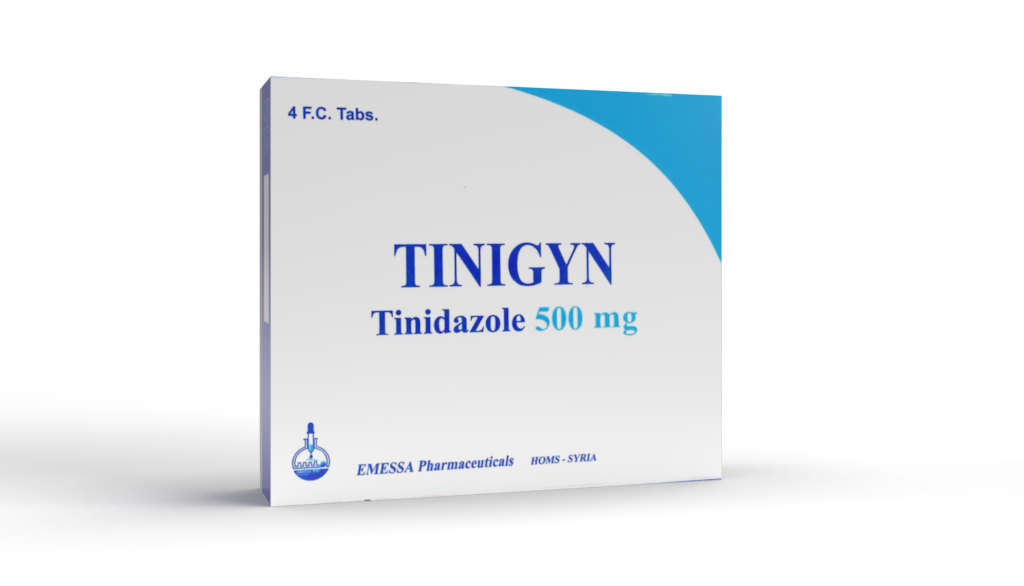
Composition: Each tablet contains 500 mg Tinidazole.
Excipient: Corn starch, lactose, croscarmellose sodium, PVP k30, isopropyl 200, magnesium stearate, talc, HPC.
Mechanism Of action:
Tinidazole is an antiprotozoal, antibacterial agent.
Pharmacokinetics:
Absorption: TINIDAZOL is rapidly and completely absorbed after oral administration.
Distribution: Tinidazole is widely distributed in all body tissues and also crosses the blood brain barrier, obtaining clinically effective concentrations in all tissues. The apparent volume of distribution is about 50 litres. About 12% of plasma tinidazole is bound to plasma.
Tinidazole is excreted by the liver and kidneys. Studies in healthy patients have shown that over 5 days, 60-65% of an administered dose is excreted by the kidneys with 20-25% of the administered dose excreted as unchanged tinidazole. Up to 5% of the administered dose is excreted in the aeces.
Indication:
TINIGYN is indicated for the treatment of trichomoniasis caused by Trichomonasvaginalis. The
organism should be identified by appropriate diagnostic procedures. Because trichomoniasis is a
sexually transmitted disease with potentially serious sequelae, partners of infected patients should be
treated simultaneously in order to prevent re-infection.
Sections or subsections omitted from the full prescribing information are not listed.
TINIGYN is indicated for the treatment of giardiasis caused by Giardia duodenalis (also termed G.
lamblia) in both adults and pediatric patients older than three years of age.
3 .Amebiasis:
TINIGYN is indicated for the treatment of intestinal amebiasis and amebic liver abscess caused by
Entamoebahistolytica in both adults and pediatric patients older than three years of age. It is not
indicated in the treatment of asymptomatic cyst passage.
4 .Bacterial Vaginosis:
TINIGYN is indicated for the treatment of bacterial vaginosis (formerly referred to as Haemophilus
vaginitis, Gardnerella vaginitis, nonspecific vaginitis, or anaerobic vaginosis) in non-pregnant women .
Other pathogens commonly associated with vulvovaginitis such as Trichomonasvaginalis, Chlamydia
trachomatis, Neisseria gonorrhoeae, Candida albicans and Herpes simplex virus should be ruled out.
To reduce the development of drug-resistant bacteria and maintain the effectiveness of Tinidazole and
other antibacterial drugs, Tinidazole should be used only to treat or prevent infections that are proven or strongly suspected to be caused by susceptible bacteria. When culture and susceptibility information are available, they should be considered in selecting or modifying antibacterial therapy. In the absence of such data, local epidemiology and susceptibility patterns may contribute to the empiric selection of
therapy.
Dosage and Method of Administration:
Dosing Instructions:
It is advisable to take TINIGYN with food to minimize the incidence of epigastric discomfort and other
gastrointestinal side-effects. Food does not affect the oral bioavailability of tinidazole.
Alcoholic beverages should be avoided when taking tinidazole and for 3 days afterwards.
Compounding of the Oral Suspension:
For those unable to swallow tablets, TINIGYN tablets may be crushed in artificial cherry syrup to be
taken with food.
The suspension of crushed tablets in artificial cherry syrup is stable for 7 days at room temperature. When this suspension is used, it should be shaken well before each administration.
Trichomoniasis:
The recommended dose in both females and males is a single 2 g oral dose taken with food. Since
trichomoniasis is a sexually transmitted disease, sexual partners should be treated with the same dose
and at the same time.
Giardiasis:
The recommended dose in adults is a single 2 g dose taken with food. In pediatric patients older than
three years of age, the recommended dose is a single dose of 50 mg/kg (up to 2 g) with food.
Amebiasis:
Intestinal: The recommended dose in adults is a 2 g dose per day for 3 days taken with food. In pediatric
patients older than three years of age, the recommended dose is 50 mg/kg/day (up to 2 g per day) for 3
days with food.
Amebic Liver Abscess: The recommended dose in adults is a 2 g dose per day for 3-5 days taken with
food. In pediatric patients older than three years of age, the recommended dose is 50 mg/kg/day (up to 2 g per day) for 3-5 days with food. There are limited pediatric data on durations of therapy exceeding 3 days, although a small number of children were treated for 5 days without additional reported adverse
reactions. Children should be closely monitored when treatment durations exceed 3 days.
Bacterial Vaginosis:
The recommended dose in non-pregnant females is a 2 g oral dose once daily for 2 days taken with food
or a 1 g oral dose once daily for 5 days taken with food. The use of tinidazole in pregnant patients has
not been studied for bacterial vaginosis.
Contraindications:
The use of tinidazole is contraindicated:
In patients with a previous history of hypersensitivity to tinidazole or other nitroimidazole derivatives. Reported reactions have ranged in severity from urticaria to Stevens-Johnson syndrome.
During first trimester of pregnancy.
In nursing mothers: Interruption of breast-feeding is recommended during tinidazole therapy and for
3 days following the last dose.
Warnings and precautions:
Neurological Adverse Reactions:
Convulsive seizures and peripheral neuropathy, the latter characterized mainly by numbness or
paresthesia of an extremity, have been reported in patients treated with tinidazole. The appearance of
abnormal neurologic signs demands the prompt discontinuation of tinidazole therapy.
Vaginal Candidiasis:
The use of TINIGYN may result in Candida vaginitis.
Blood Dyscrasia:
TINIGYN should be used with caution in patients with evidence of or history of blood dyscrasia.
Drug Resistance:
Prescribing TINIGYN in the absence of a proven or strongly suspected bacterial infection or a
prophylactic indication is unlikely to provide benefit to the patient and increases the risk of the
development of drug-resistant bacteria.
ADVERSE REACTIONS:
Common:
Metallic/bitter taste, Nausea, Anorexia, Dyspepsia/cramps/epigastric Discomfort, Vomiting, Constipation, Weakness/fatigue/malaise, Dizziness, Headache,
Other adverse reactions reported with tinidazole include:
Numbness,paresthesia, vertigo, ataxia, giddiness, insomnia, drowsiness,tongue discoloration, stomatitis, diarrhea,urticaria, pruritis, rash, flushing, sweating, dryness of mouth, fever, burning sensation,thirst, salivation, angioedema,darkenedurine,palpitations,transient neutropenia, transient leukopenia,Candida overgrowth, increased vaginal discharge, oral candidiasis, hepatic abnormalities
including raised transaminase level, arthralgias, myalgias, and arthritis.
Drug Interaction:
Warfarin and Other Oral Coumarin Anticoagulants: As with metronidazole, tinidazole may enhance the
effect of warfarin and other coumarin anticoagulants, resulting in a prolongation of prothrombin time.
The dosage of oral anticoagulants may need to be adjusted during TINIGYN co-administration and up to 8 days after discontinuation.
Alcohols, Disulfiram: Alcoholic beverages and preparations containing ethanol or propylene glycol
should be avoided during TINIGYN therapy and for 3 days afterward because abdominal cramps,
nausea, vomiting, headaches, and flushing may occur. Psychotic reactions have been reported in
alcoholic patients using metronidazole and disulfiram concurrently. Though no similar reactions have
been reported with tinidazole, tinidazole should not be given to patients who have taken disulfiram
within the last two weeks.
Lithium: Metronidazole has been reported to elevate serum lithium levels. It is not known if tinidazole
shares this property with metronidazole, but consideration should be given to measuring serum lithium
and creatinine levels after several days of simultaneous lithium and tinidazole treatment to detect
potential lithium intoxication.
Phenytoin, Fosphenytoin: Concomitant administration of oral metronidazole and intravenous phenytoin
was reported to result in prolongation of the half-life and reduction in the clearance of phenytoin.
Metronidazole did not significantly affect the pharmacokinetics of orally-administered phenytoin.
Cyclosporine, Tacrolimus: There are several case reports suggesting that metronidazole has the potential to increase the levels of cyclosporine and tacrolimus. During TINIGYN co-administration with either of these drugs, the patient should be monitored for signs of calcineurin-inhibitor associated toxicities.
Fluorouracil: Metronidazole was shown to decrease the clearance of fluorouracil, resulting in an
increase in side-effects without an increase in therapeutic benefits. If the concomitant use of TINIGYN
and fluorouracil cannot be avoided, the patient should be monitored for fluorouracil-associated
toxicities.
Potential Effects of Other Drugs on Tinidazole
CYP3A4 Inducers and Inhibitors:
Simultaneous administration of TINIGYN with drugs that induce liver
microsomal enzymes, i.e., CYP3A4 inducers such as phenobarbital, rifampin, phenytoin, and osphenytoin
(a pro-drug of phenytoin), may accelerate the elimination of tinidazole, decreasing the plasma level of
tinidazole. Simultaneous administration of drugs that inhibit the activity of liver microsomal enzymes,
i.e., CYP3A4 inhibitors such as cimetidine and ketoconazole, may prolong the half-life and decrease the
plasma clearance of tinidazole, increasing the plasma concentrations of tinidazole.
Cholestyramine:
Cholestyramine was shown to decrease the oral bioavailability of metronidazole by
21%. Thus, it is advisable to separate dosing of cholestyramine and tinidazole to minimize any potential
effect on the oral bioavailability of tinidazole.
Oxytetracycline:
Oxytetracycline was reported to antagonize the therapeutic effect of metronidazole.
Pregnancy: Teratogenic effects : Pregnancy Category C
Since tinidazole crosses the placental barrier and enters fetal circulation it should not be administered to pregnant patients in the first trimester.Although there is some evidence of mutagenic potential and animal reproduction studies are not always predictive of human response, the use of tinidazole after the first trimester of pregnancy requires that the potentialbenefits of the drug be weighed against the possible risks to both the mother and the fetus.
Nursing Mothers:
Tinidazole is excreted in breast milk in concentrations similar to those seen in serum. Tinidazole can be detected in breast milk for up to 72 hours following administration. Interruption of breast-feeding is recommended during TINIGYN therapy and for 3 days following the last dose.
Pediatric Use:
Other than for use in the treatment of giardiasis and amebiasis in pediatric patients older than three years of age, safety and effectiveness of TINIGYN in pediatric patients have not been established.
Geriatric Use:
In general, dose selection for anelderly patient should be cautious, reflecting the greater frequency of decreased hepatic, renal, orcardiac function, and of concomitant disease or other drug therapy.
Renal Impairment:
Because the pharmacokinetics of tinidazole in patients with severe renal impairment (CrCL< 22 mL/min)
are not significantly different from those in healthy subjects, no dose adjustments are necessary in these
patients.
Patients undergoing hemodialysis: If tinidazole is administered on the same day as and prior to
hemodialysis, it is recommended that an additional dose of TINIGYN equivalent to one-half of the
recommended dose be administered after the end of the hemodialysis.
Hepatic Impairment:
Usual recommended doses of TINIGYN should be administered cautiously in patients with hepatic
Dysfunction.
OVERDOSAGE:
There are no reported overdoses with tinidazole in humans. Treatment of Overdosage: There is no specific antidote for the treatment of overdosage with tinidazole; therefore, treatment should be symptomatic and supportive. Gastric lavage may be helpful.Hemodialysis can be considered because approximately 43% of the amount present in the body is eliminated during a 6-hour hemodialysis session.
Storage Conditions: Store at temperature below 25°c.
Packaging: Tinigyn is supplied in a carton of 4 tablets