
clear

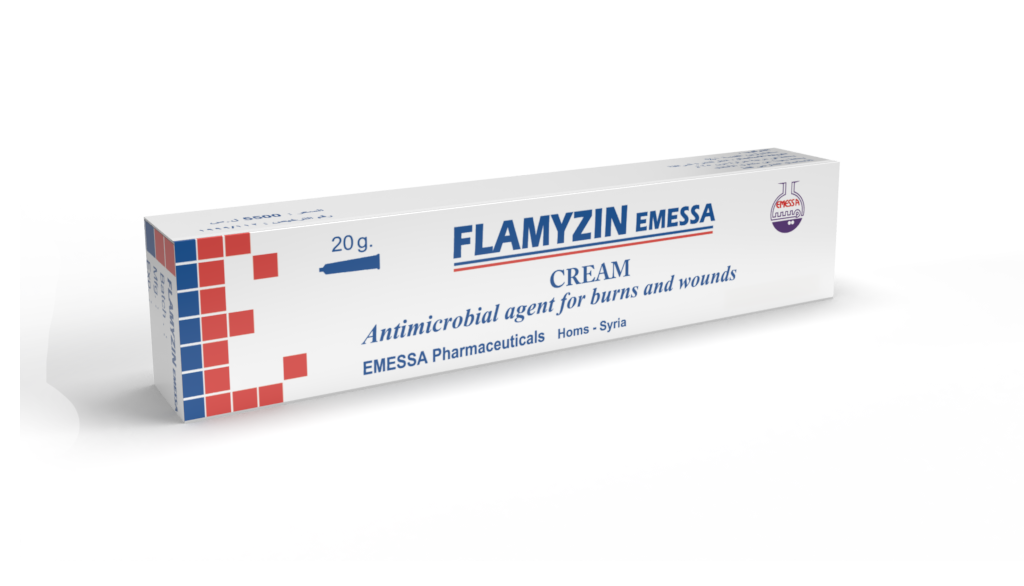
CHEMICAL COMPOSITION: Each 1g contains 10 mg SILVER SULFADIAZINE
PHARMACOLOGICAL PROPERTIES:
Silver sulfadiazine has broad antimicrobial activity. It is bactericidal for many gram-negative and gram-positive bacteria as well as being effective against yeast.
Sufficient data have been obtained to demonstrate that silver sulfadiazine will inhibit bacteria that are resistant to other antimicrobial agents and that the compound is superior to sulfadiazine.
Studies have revealed that the mechanism of action of silver sulfadiazine on bacteria differs from silver nitrate and sodium sulfadiazine. Silver sulfadiazine acts only on the cell membrane and cell wall to produce its bactericidal effect.
Silver sulfadiazine is not a carbonic anhydrase inhibitor and may be useful in situations where such agents are contraindicated.
INDICATIONS:
As an adjunct for the prevention and treatment of wound sepsis in patients with second- and third-degree burns.
CONTRAINDICATIONS:
Patients who are hypersensitive to silver sulfadiazine or any of the other ingredients in the preparation.
Because sulfonamide therapy is known to increase the possibility of kernicterus, Silver sulfadiazine 1% cream should not be used on pregnant women approaching or at term, on premature infants, or on newborn infants during the first 2 months of life.
WARNINGS:
There is potential cross-sensitivity between silver sulfadiazine and other sulfonamides. If allergic reactions attributable to treatment with silver sulfadiazine occur, continuation of therapy must be weighed against the potential hazards of the particular allergic reaction.
Fungal proliferation in and below the eschar may occur. However, the incidence of clinically reported fungal superinfection is low.
The use of Silver sulfadiazine 1% cream in some cases of glucose-6-phosphate dehydrogenase-deficient individuals may be hazardous, as hemolysis may occur.
PRECAUTIONS:
General: If hepatic and renal functions become impaired and elimination of drug decreases, accumulation may occur and discontinuation of Silver sulfadiazine 1% cream should be weighed against the therapeutic benefit being achieved.
In considering the use of topical proteolytic enzymes in conjunction with Silver sulfadiazine 1% cream, the possibility should be noted that silver may inactivate such enzymes.
Laboratory Tests: In the treatment of burn wounds involving extensive areas of the body, the serum sulfa concentrations may approach adult therapeutic levels (8 mg % to 12 mg %). Therefore, in these patients it would be advisable to monitor serum sulfa concentrations. Renal function should be carefully monitored and the urine should be checked for sulfa crystals. Absorption of the propylene glycol vehicle has been reported to affect serum osmolality, which may affect the interpretation of laboratory tests.
PREGNANCY & LACTATION:
Pregnancy: Pregnancy Category B. this drug should be used during pregnancy only if clearly justified, especially in pregnant women approaching or at term.
Nursing Mothers: It is not known whether silver sulfadiazine is excreted in human milk. However, sulfonamides are known to be excreted in human milk, and all sulfonamide derivatives are known to increase the possibility of kernicterus. Because of the possibility for serious adverse reactions in nursing infants from sulfonamides, a decision should be made whether to discontinue nursing or to discontinue the drug, taking into account the importance of the drug to the mother.
Geriatric Use:
Clinical experience has not identified differences in responses between the elderly and younger patients
Pediatric Use:
Safety and effectiveness in pediatric patients have not been established
ADVERSE REACTIONS:
Several cases of transient leukopenia have been reported in patients receiving silver sulfadiazine therapy. Leukopenia associated with silver sulfadiazine administration is primarily characterized by decreased neutrophil count. Maximal white blood cell depression occurs within 2 to 4 days of initiation of therapy. Rebound to normal leukocyte levels follows onset within 2 to 3 days. Recovery is not influenced by continuation of silver sulfadiazine therapy. An increased incidence of leukopenia has been reported in patients treated concurrently with cimetidine.
Other infrequently occurring events include skin necrosis, erythema multiforme, skin discoloration, burning sensation, rashes, and interstitial nephritis.
Reduction in bacterial growth after application of topical antibacterial agents has been reported to permit spontaneous healing of deep partial-thickness burns by preventing conversion of the partial thickness to full thickness by sepsis. However, reduction in bacterial colonization has caused delayed separation, in some cases necessitating escharotomy in order to prevent contracture.
Absorption of silver sulfadiazine varies depending upon the percent of body surface area and the extent of the tissue damage. Although few have been reported, it is possible that any adverse reaction associated with sulfonamides may occur. Some of the reactions, which have been associated with sulfonamides, are as follows: blood dyscrasias including agranulocytosis, aplastic anemia, thrombocytopenia, leukopenia, and hemolytic anemia; dermatologic and allergic reactions, including Stevens-Johnson syndrome and exfoliative dermatitis; gastrointestinal reactions; hepatitis and hepatocellular necrosis; CNS reactions; and toxic nephrosis.
DOSAGE AND ADMINISTRATION:
Prompt institution of appropriate regimens for care of the burned patient is of prime importance and includes the control of shock and pain. The burn wounds are then cleansed and debrided, and Burn-heal Cream 1% (silver sulfadiazine) is applied under sterile conditions. The burn areas should be covered with Silver sulfadiazine 1% cream at all times. The cream should be applied once to twice daily to a thickness of approximately 1.5 millimetre Whenever necessary, the cream should be reapplied to any areas from which it has been removed by patient activity. Administration may be accomplished in minimal time because dressings are not required. However, if individual patient requirements make dressings necessary, they may be used.
Reapply immediately after hydrotherapy.
Treatment with Silver sulfadiazine 1% cream should be continued until satisfactory healing has occurred, or until the burn site is ready for grafting. The drug should not be withdrawn from the therapeutic regimen while there remains the possibility of infection except if a significant adverse reaction occurs.
STORAGE: Store at temperature below 25℃
PACKAGING:
1- A tube contains 20 g.
2- A tube contains 30 g.
3- A tube contains 40 g
4- A tube contains 50 g.
5- A plastic jar contains 120 g.
6- A plastic jar contains 250 g.