

clear

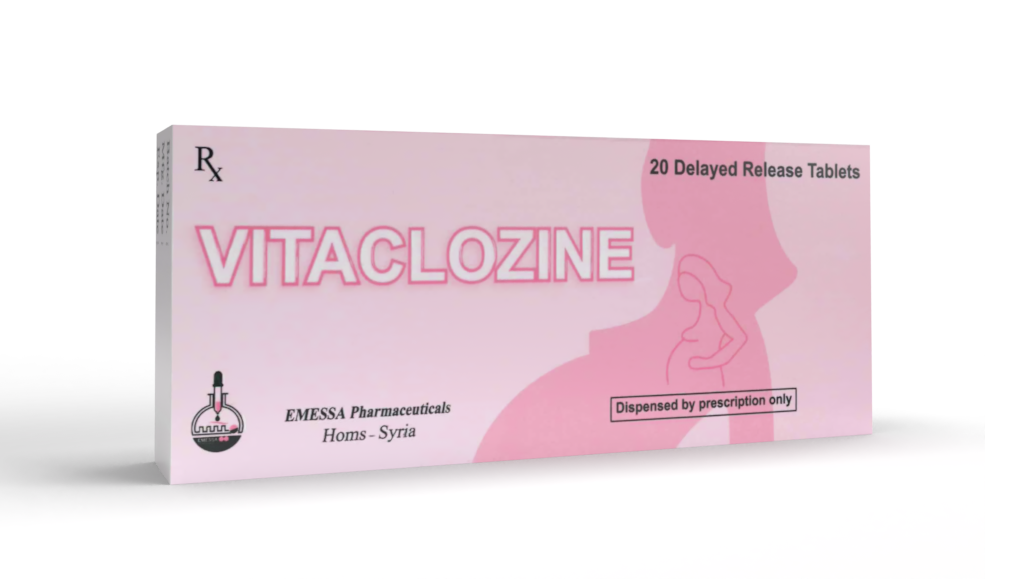
Composition: Each delayed release tablet contains :
Doxylamine succinate 10 mg
Pyridoxine Hcl (Vitamin B6) 10 mg
Excipients: Lactose, microcrystalline cellulose, eudragit, aerosil, PVP K30
Pharmacokinetics:
Absorption: Doxylamine and pyridoxine are absorbed in the gastrointestinal tract, mainly in the jejunum. The Cmax of doxylamine and pyridoxine are achieved within 7.5 and 5.5 hours, respectively.
Food effect: The administration of food delays the absorption of both doxylamine and pyridoxine. This delay is associated with a lower peak concentration of doxylamine, but the extent of absorption is not affected.
Distribution: Pyridoxine is highly protein bound, primarily to albumin.
Metabolism: Doxylamine is biotransformed in the liver to its principle metabolites.
Pyridoxine is a prodrug primarily metabolized in the liver.
Excretion: The principle metabolites of doxylamine are excreted by the kidney. The terminal elimination half-life of doxylamine and pyridoxine are 12.5 hours and 0.5 hours, respectively.
Indications:
VITACLOZINE is indicated for the treatment of nausea and vomiting of pregnancy in women who do not respond to conservative management.
Limitations of Use: This drug has not been studied in women with hyperemesis gravidarum.
Contraindications:
Warnings & Precautions:
Activities Requiring Mental Alertness: This drug may cause somnolence. Women should avoid engaging in activities requiring complete mental alertness, such as driving or operating heavy machinery, while using VITACLOZINE.
The use of VITACLOZINE is not recommended if a woman is concurrently using central nervous system depressants including alcohol. The combination may result in severe drowsiness leading to falls or accidents.
Concomitant Medical Conditions: THIS DRUG has anticholinergic properties and, therefore, should be used with caution in women with: asthma, increased intraocular pressure, narrow angle glaucoma, stenosing peptic ulcer, pyloroduodenal obstruction and urinary bladder-neck obstruction.
Pregnancy:
Category A, VITACLOZINE is intended for use in pregnant women.
Lactation:
Women should not breastfeed while using THIS DRUG.
Excitement, irritability and sedation have been reported in nursing infants presumably exposed to doxylamine succinate through breast milk. Infants with apnea or other respiratory syndromes may be particularly vulnerable to the sedative effects of THIS DRUG resulting in worsening of their apnea or respiratory conditions.
Pyridoxine hydrochloride is excreted into breast milk. There have been no reports of adverse events in infants presumably exposed to pyridoxine hydrochloride through breast milk.
Pediatric Use
The safety and effectiveness of THIS DRUG in children under 18 years of age have not been established.
Drug Interactions
Side effect:
Somnolence, Falls or other accidents resulting from the effect of the combined use of VITACLOZINE with CNS depressants including alcohol.
Postmarketing Experience:
dyspnea, palpitation, tachycardia, vertigo, blurred vision, visual disturbances, abdominal distension, abdominal pain, constipation, diarrhea, chest discomfort, fatigue, irritability, malaise, hypersensitivity, dizziness, headache, migraines, paresthesia, psychomotor hyperactivity, anxiety, disorientation, insomnia, nightmares, dysuria, urinary retention, hyperhidrosis, pruritus, rash, maculo-papular rash.
Doses & Administration:
Overdoses:
VITACLOZINE is a delayed-release formulation, therefore, signs and symptoms of intoxication may not be apparent immediately.
Signs and symptoms of overdose may include restlessness, dryness of mouth, dilated pupils, sleepiness, vertigo, mental confusion and tachycardia. At toxic doses, doxylamine exhibits anticholinergic effects, including seizures, rhabdomyolysis, acute renal failure and death.
If treatment is needed, it consists of gastric lavage or activated charcoal, whole bowel irrigation and symptomatic treatment.
Storage conditions: Store in a cool and dry place below 25°c.
How supplied: A carton box contains 20 delayed release tablets of VITACLOZINE.